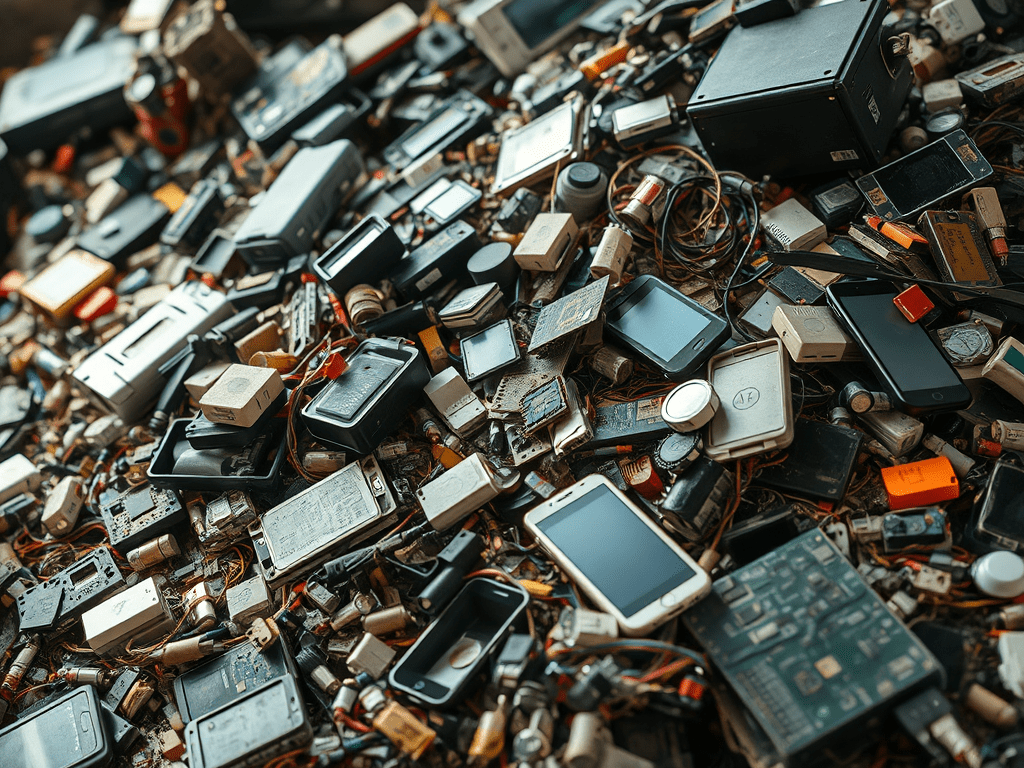
BlackFriday might be about shopping, but for me, it’s a reminder of a different kind of value – the value of sustainability, of seeing potential where others see trash.
When I graduated with an electronics engineering degree, the traditional path was crystal clear: join an IT company, get “trained,” and become another cog in the massive corporate machine. “We’ll make you IT-ready in 3-4 months,” they promised with corporate enthusiasm. Awesome pitch, but something inside me screamed: not today, not ever.
I wanted different. I craved innovative. I was hungry for impact.
My first job? De-engineering electronics equipment. While my peers were debugging code and configuring servers, I was dismantling machines, understanding their anatomy, seeing beyond their perceived end-of-life.
In 2009 – a time when “sustainability” was barely a buzzword – I met Jeevesh, founder of Greenscape. One conversation, and my entire professional universe expanded. We discussed e-waste recycling, a concept so revolutionary it felt like we were technological shamans, speaking a language few understood.
Why was this encounter so electrifying?
1. Nobody Was Doing It
The sector’s novelty was intoxicating. Most saw electronic waste as a problem; we saw it as an opportunity. My motivation? Pure, unadulterated curiosity about emerging ecosystems and their transformative potential.
2. Startup Spirit
Corporate ladders never appealed to me. I thrived in small, agile teams where impact trumped process. No endless meetings, no bureaucratic approvals – just pure, unbridled execution and innovation.
3. Confronting the Waste Monster
Growing up near Delhi’s infamous garbage mountains, I’d witnessed an environmental apocalypse in slow motion. E-waste was mostly a geopolitical dumping ground – primarily in China and India. Entire mountains of obsolete computers, laptops, and mobile phones waiting to leach toxins into our soil, water, and air.
My mission crystallized: Prevent the next toxic waste catastrophe.
We weren’t just collecting waste. We were architecting a revolution:
- Collect Waste
- Repair, Reuse, Reduce
- Recycle, Reclaim, Reintroduce
Regulatory pioneers like the EU’s Waste Electrical and Electronics Equipment (WEEE) regulation became our philosophical and practical north star.
Fast Forward to 2024
Circular Economy is no longer a hipster concept or corporate greenwashing – it’s our global survival strategy.
With developing economies justifiably frustrated by a mere $300 billion climate finance commitment, we need more than diplomatic promises. We need a radical, systemic transformation.
The core principles remain elegantly unchanged: Design with the end in mind. Plan each material’s next transformative journey. See waste not as an endpoint, but as a beginning.
Here’s the real, often-overlooked insight: The first mile of waste management isn’t about collection. It’s about reimagining product design from the very first blueprint.
The Circular Economy Manifesto
- Every product deserves a second life
- Design with regeneration, not disposal, in mind
- Transparency is not a luxury – it’s a necessity
- Material flow is a continuous dance, not a linear march
 Sustainability For All
Leave a comment